
Resources → Gear & Equipment
Perches & Blocks
The perch is where your raptor spends the majority of its time. Whether in the mews, on the weathering yard, or in your vehicle during transport, the right perch supports foot health, prevents feather damage, and gives the bird a secure, comfortable place to rest. Choosing the correct perch type for your species is one of the most important equipment decisions you will make.
Why Perch Choice Matters
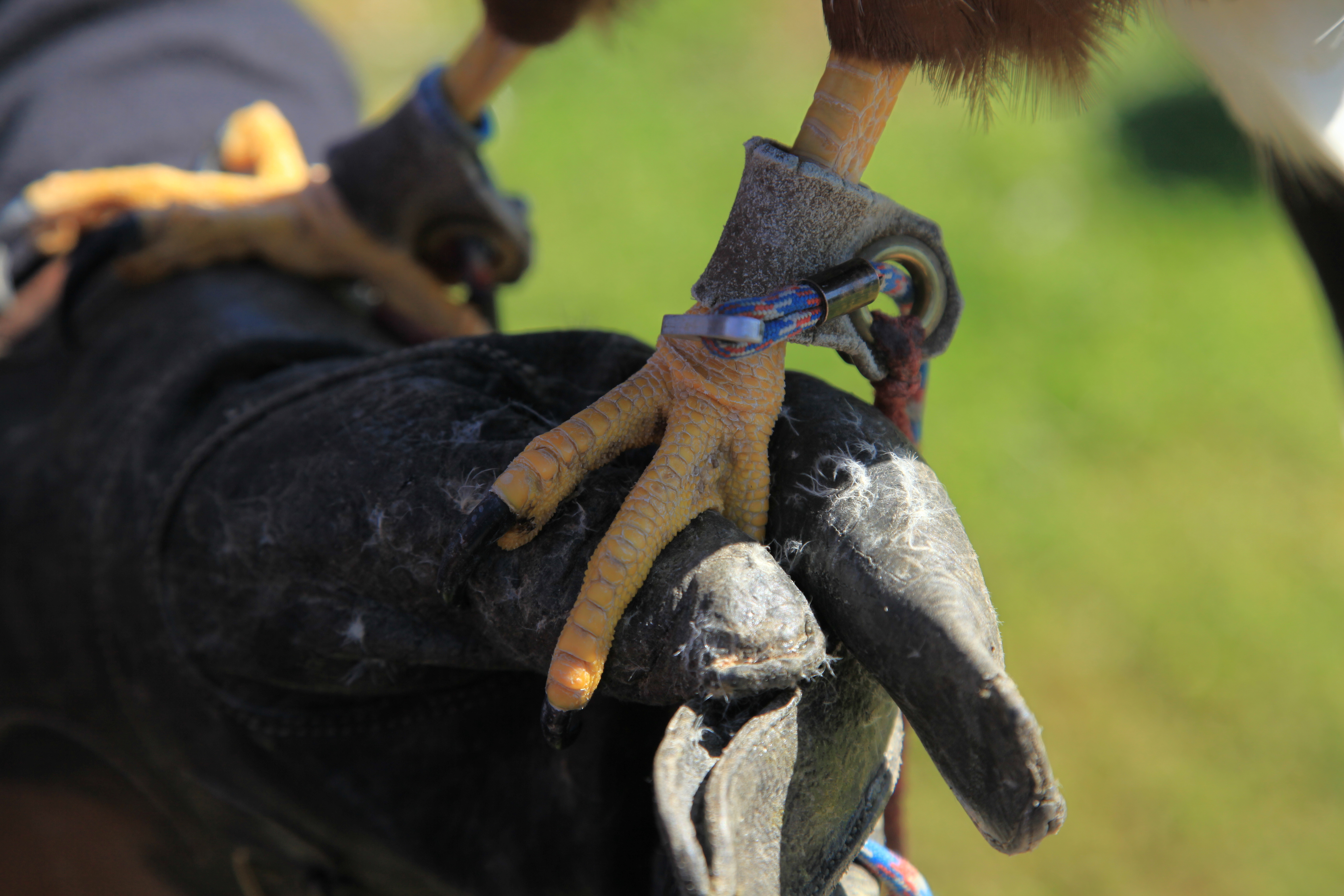
A raptor's feet are its most important tool. Talons catch and kill prey, feet grip the perch during rest, and the pads of the feet (the plantar surface) bear the bird's entire weight for hours at a time. A perch with the wrong diameter, surface texture, or design can cause bumblefoot (pododermatitis), a bacterial infection of the foot pad that is one of the most common and serious health problems in captive raptors.
Beyond foot health, the perch design affects the bird's psychological well-being. A bird that feels insecure on its perch will bate repeatedly, damaging flight feathers and exhausting itself. A bird on an appropriate perch sits calmly, rousing and preening normally, which indicates comfort and low stress.
Most falconers own multiple perches: a primary perch for the mews, a weathering perch for outdoor sunning and bathing, and a portable perch for the vehicle or field use.
Bow Perches
The bow perch is a curved horizontal bar mounted on two upright supports, shaped like an archery bow laid on its side. The bird perches on the top of the arc, and the leash passes through a ring that slides freely along the perch bar, allowing the bird to move from one end to the other without the leash catching.
Bow perches are the standard perch for hawks (buteos and accipiters). These species naturally perch on branches with their feet wrapped around a cylindrical surface, and the bow perch replicates this grip. The curved design means the bird always sits at the highest point, which provides a sense of security and a commanding view of its surroundings.
Key design considerations for bow perches include the diameter of the bar (which must match the bird's foot size), the height of the perch (typically 18 to 24 inches), and the surface wrapping. Bare metal or PVC is slippery and promotes bumblefoot. The perching surface should be wrapped in leather, AstroTurf, or cork to provide grip and cushioning.
The leash ring must slide freely along the full length of the bar. A ring that catches or sticks will cause the leash to wrap around the perch, restricting the bird's movement and potentially injuring its legs when it bates.
Block Perches
The block perch is a flat-topped cylindrical or slightly domed platform mounted on a central post with a weighted base. The bird stands on the flat top surface with its talons gripping the edge or resting on the padded surface. The leash attaches to a ring at the base of the post.
Block perches are designed for falcons (Falconidae), which naturally perch on flat surfaces such as cliff ledges, building ledges, and fence posts rather than wrapping their feet around branches. A falcon placed on a bow perch will often look uncomfortable and may develop foot problems because its foot anatomy is not suited to cylindrical gripping.
The top surface of a block perch should be covered with cork, AstroTurf, or textured rubber to provide grip and cushioning. The diameter should be large enough for the falcon to stand comfortably with both feet on the surface: typically 4 to 5 inches for kestrels and merlins, 5 to 7 inches for peregrines and prairie falcons, and 7 to 9 inches for gyrfalcons.
The height of a block perch is typically lower than a bow perch, usually 10 to 16 inches. Falcons prefer a lower vantage point than hawks and are less prone to bating from a block than hawks are from a bow perch.
Ring Perches
Ring perches consist of a large circular hoop (typically 24 to 36 inches in diameter) mounted horizontally on a base. The bird perches on the ring, and the leash passes through the center opening. Ring perches are used primarily in mews for larger hawks and eagles, where the circular design gives the bird maximum freedom of movement while preventing leash tangles.
Ring perches are especially useful for birds that pace or move frequently on the perch, such as goshawks. The continuous circular surface means the bird can walk the full circumference without encountering an endpoint, which reduces frustration and bating behavior.
Screen Perches
A screen perch is a rectangular frame with a mesh or slat surface, typically mounted at an angle against a wall or standing freely. The bird perches on the top edge of the frame, using the screen as a backrest. Screen perches are primarily used inside the mews as an alternative to free-standing perches.
Screen perches work well for newly trapped or nervous birds because the solid screen behind and below the bird provides a sense of security. The bird cannot see through the screen, which reduces visual stimulation from below and behind, helping the bird stay calm during the early manning process.
The top perching edge should be wrapped in leather or cord for grip, and the screen material should be smooth enough that the bird's feathers do not catch on it. Hardware cloth (welded wire mesh) works well, but the cut edges must be filed smooth to prevent feather damage.
Shelf Perches
Shelf perches are flat platforms mounted to the mews wall at an elevated position. They are most commonly used for eagles and large hawks, providing a broad, stable surface where the bird can stand, eat, and rest. Shelf perches are not typically used for tethered birds; instead, they are features of free-loft mews where the bird is not tethered and can fly to the shelf from the ground.
The shelf surface should be covered in AstroTurf or outdoor carpet for grip and cushioning. The shelf should be positioned high enough that the bird can survey the mews interior but with enough headroom that the bird does not scrape its head or tail on the ceiling.
Which Perch for Which Species
- Red-tailed Hawk: Bow perch (primary), screen perch (mews alternative). Bar diameter 1.25 to 1.5 inches.
- Harris's Hawk: Bow perch. These social hawks also do well on T-perches when kept in groups. Bar diameter 1.25 to 1.5 inches.
- Cooper's Hawk: Bow perch or screen perch. Accips are nervous and benefit from screen perches during early training. Bar diameter 0.75 to 1 inch.
- Goshawk: Ring perch or bow perch. Goshawks pace and benefit from the continuous surface of a ring perch. Bar diameter 1.25 to 1.5 inches.
- Peregrine Falcon: Block perch. Top diameter 5 to 7 inches.
- Prairie Falcon: Block perch. Top diameter 5 to 6 inches.
- American Kestrel: Block perch (small) or bow perch (small diameter). Top diameter 3 to 4 inches or bar diameter 0.5 to 0.75 inches.
- Merlin: Block perch. Top diameter 4 to 5 inches.
- Gyrfalcon: Block perch. Top diameter 7 to 9 inches.
- Golden Eagle: Ring perch, shelf perch, or heavy-duty bow perch. Bar diameter 2 to 2.5 inches.
Materials and Surfaces
The perching surface is the most critical material decision. The surface must provide adequate grip without being abrasive, cushion the bird's feet to prevent pressure sores, and be easy to clean since the bird will defecate on and around it regularly.
- AstroTurf is the most popular perching surface material. It provides excellent grip, cushions the foot pads, and can be removed, washed, and replaced easily. Use short-pile outdoor AstroTurf rather than long-pile indoor carpet grass, which can trap moisture and harbor bacteria.
- Cork is a traditional surface for block perch tops. It provides good grip, natural cushioning, and is visually attractive. Cork wears out faster than AstroTurf and must be replaced periodically.
- Leather wrapping works well for bow perch bars. It conforms to the bird's foot, provides grip, and is comfortable. Leather must be conditioned to prevent cracking and should be replaced when it becomes smooth and hard from wear.
- Sisal rope is sometimes used to wrap bow perch bars. It provides good grip and is inexpensive, but it can harbor bacteria in its fibers and is difficult to clean thoroughly.
For the perch structure itself, powder-coated steel, aluminum, and treated hardwood are all acceptable. Avoid untreated wood, which absorbs moisture and mutes (droppings) and becomes a breeding ground for bacteria. Avoid bare PVC, which is too slippery for any raptor species.
Indoor vs. Outdoor Use
Indoor perches (mews use) should prioritize cleanliness and stability. The perch base must be heavy enough that the bird cannot tip it when bating. Indoor perches benefit from removable, washable surface covers.
Outdoor perches (weathering yard use) must withstand sun, rain, wind, and temperature extremes. Metal components should be stainless steel, powder-coated steel, or aluminum to prevent corrosion. The perch base must be anchored or weighted enough to resist gusty winds. AstroTurf surfaces dry quickly after rain and resist UV degradation, making them the best choice for outdoor perch surfaces.
Portable perches for vehicle transport should be lightweight, collapsible, and have a base that fits securely in the vehicle bed or cargo area. Many falconers build custom vehicle perches from PVC pipe and fittings that break down for storage.
Top Picks
Steel bow perch with AstroTurf-wrapped bar and free-sliding leash ring. Suitable for red-tailed hawks, Harris's hawks, and other buteos. Weighted base prevents tipping during bates.
Cork-topped block perch designed for falcons. Sturdy central post with weighted base and leash ring. Available in multiple top diameters for kestrels through gyrfalcons.
Angled screen perch for mews use. Hardware cloth screen with leather-wrapped top edge. Excellent for newly trapped hawks and nervous accipiters during the manning process.
Pre-cut AstroTurf covers for bow perch bars and block perch tops. Short-pile outdoor grade for grip and drainage. Easy to install and replace when worn.
Browse Perch Sellers
Find verified falconry equipment dealers offering perches, blocks, and perching accessories.
Browse SellersList Your Products
Build or sell falconry perches? Reach falconers looking for quality equipment.
Submit Your Listing