
Resources → Reference
Complete Falconry Equipment Checklist
Starting falconry means assembling a specialized set of equipment before you ever possess a bird. This comprehensive checklist covers every item you need, organized by category, with estimated costs and explanations of why each piece matters.
Falconry Furniture (Bird Equipment)
Falconry furniture refers to the equipment attached to or worn by the bird. These are the items you will use every single day, so quality matters. Poorly made furniture can injure your hawk or cause a lost bird.
| Item | Purpose | Est. Cost |
|---|---|---|
| Anklets | Leather straps permanently fitted around the bird’s legs. Grommeted anklets (Aylmeri style) are the modern standard, allowing quick jess changes without re-tying. | $15–$35 |
| Jesses | Leather straps that thread through the anklet grommets. You need two sets: mews jesses (short, no slits) for the perch and field jesses (longer, with slits) for handling. Never fly a bird on slitted jesses - they snag on branches. | $10–$25/pair |
| Swivel | A rotating metal connector between jesses and leash that prevents tangling. Sampo ball-bearing swivels are the industry standard. | $8–$20 |
| Leash | Braided or flat leather strap that tethers the bird to the perch via the swivel. Must be strong enough to hold a bating hawk but thin enough not to tangle. | $10–$25 |
| Bewits | Small leather straps used to attach bells to the bird’s legs. Tied with a special knot that stays secure but can be removed. | $5–$10 |
| Bells | Attached to the legs (and sometimes the tail deck) to help locate the bird in cover. Lahore-style brass bells are traditional; acorn bells are louder. Buy from a falconry supplier - craft bells are too quiet. | $12–$40/pair |
| Tail mount & bell | A small bell mounted on the central tail feathers using a leather or cable-tie mount. Provides an audible signal when the bird takes flight or lands in thick cover. | $10–$25 |
Housing & Perching
Federal regulations require an approved enclosure (mews) before you can obtain a falconry permit. Your mews must pass a state inspection, and the bird needs appropriate perching inside and in a weathering area.
| Item | Purpose | Est. Cost |
|---|---|---|
| Mews (enclosure) | Indoor housing that meets federal minimums: at least 8′ × 8′ floor area with a ceiling high enough for the bird to fly without hitting it. Must have a perch, ventilation, and protection from weather and predators. | $500–$5,000 |
| Indoor perch | Bow perch for buteos (Red-tails, Harris’s), block perch for falcons. The perch must be padded with AstroTurf, leather, or cord to prevent foot problems (bumblefoot). | $40–$120 |
| Outdoor/weathering perch | A second perch in a weathering yard so the bird can sun and bathe outdoors. The weathering area must be enclosed or the bird tethered. | $40–$120 |
| Bath pan | A shallow pan (large enough for the bird to stand in) for bathing. Raptors need regular access to water for bathing and feather maintenance. | $10–$30 |
| Perch padding material | AstroTurf, sisal rope, or leather wrap for perch surfaces. Bare wood or metal perches cause pressure sores and bumblefoot. | $10–$25 |
Training & Hunting Gear
Training equipment is used during manning (taming), conditioning, and active hunting. A well-stocked training kit saves time and keeps your bird safe in the field.
| Item | Purpose | Est. Cost |
|---|---|---|
| Falconry glove | A thick leather gauntlet worn on your fist. Protects your hand from talons. Right-handed falconers typically use a left-hand glove so the dominant hand stays free. Must be long enough to protect your wrist and forearm. | $40–$150 |
| Lure | A weighted training device swung on a cord to recall the bird. Longwing falcons use a wing-style lure; buteos and accipiters usually respond better to a rabbit-fur lure or garnished leather pad. | $15–$45 |
| Lure line | A strong cord (usually 15–30 feet) attached to the lure. Must be free of knots that could tangle in brush. | $5–$15 |
| Creance (training line) | A lightweight 50–100 foot line attached to the jesses during early training before the bird is flown free. Allows controlled distance recalls. | $10–$20 |
| Hawking vest or bag | A multi-pocket vest or belt pouch for carrying food, lure, spare equipment, and caught game while hunting. Purpose-built falconry vests have specific compartments for quarry and tidbits. | $50–$200 |
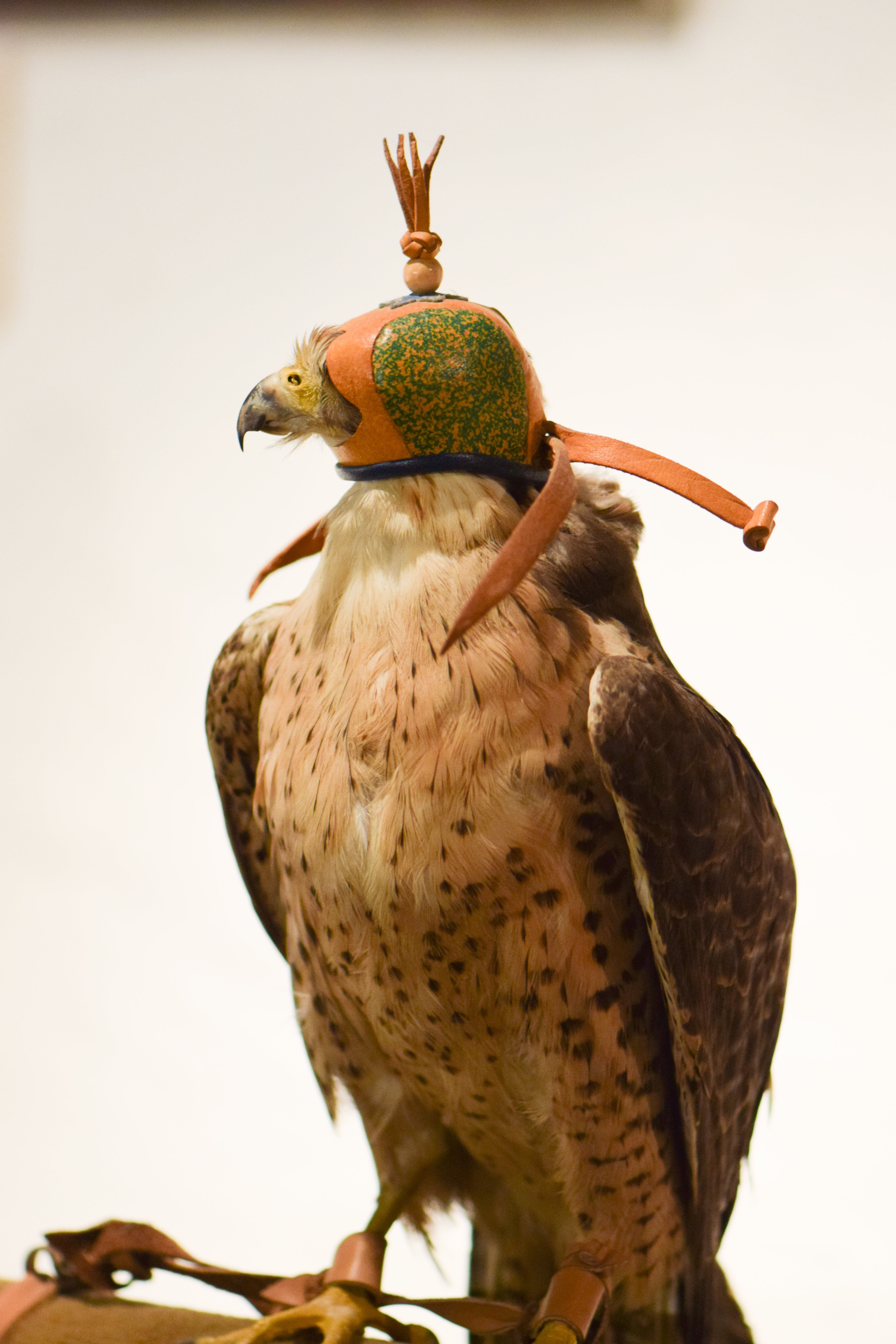
| Hood | A leather cap placed over the bird’s head to calm it during transport and in stressful situations. Essential for longwing falcons; some buteo falconers use them as well. Must be properly sized to your species. | $30–$150 |
| Whistle or voice recall | A consistent audible cue paired with food to train the bird to return. Many falconers use a specific whistle tone; others simply use their voice. | $0–$10 |
Health & Weight Management
Maintaining your bird at the correct flying weight is the single most important aspect of day-to-day falconry management. Accurate weighing, proper nutrition, and basic first-aid supplies are non-negotiable.
| Item | Purpose | Est. Cost |
|---|---|---|
| Digital scale | A gram-accurate scale for daily weigh-ins. The scale must read to at least 1-gram resolution for small hawks and kestrels. Many falconers use a perch scale the bird stands on. | $30–$100 |
| Weight journal / tracking app | A log to record daily weight, food given, weather, and hunting performance. Tracking weight trends over time is how you determine optimal flying weight. | $0–$15 |
| Casting material | Fur, feather, or cotton that the bird swallows with its meal. The hawk compresses indigestible material into a pellet (cast) and regurgitates it, cleaning the crop. Casting is essential for digestive health. | $5–$15 |
| First-aid kit | Styptic powder (for bleeding talons or beak), Vetericyn wound spray, hemostats, scissors, vet wrap, and your avian vet’s emergency number. | $25–$60 |
| Imping supplies | Imping needles and epoxy for repairing broken flight feathers. A broken primary or tail feather can ground your bird for months - imping is a quick fix using a donor feather. | $10–$30 |
| Freezer for food | A dedicated small chest freezer for storing quail, mice, chicks, and other raptor food. Keeping food separate from human food is both practical and hygienic. | $100–$250 |
Transport Equipment
You will transport your bird regularly - to hunting fields, the vet, and the weathering yard. Safe transport prevents injuries, stress, and escapes.
| Item | Purpose | Est. Cost |
|---|---|---|
| Giant hood / transport box | An enclosed, ventilated box that keeps the bird in darkness during car travel. Darkness calms the hawk and prevents bating. Must be large enough for the bird to stand without touching the sides or top. | $50–$200 |
| Vehicle perch | A portable perch that mounts to the vehicle seat or floor for short trips when hooding is not practical. Used more commonly with hooded longwings. | $30–$80 |
| Telemetry transmitter | A small radio or GPS transmitter attached to the bird’s leg or tail. If the bird is lost, telemetry allows you to track and recover it. Considered essential by most experienced falconers. | $150–$600+ |
| Telemetry receiver | A handheld receiver and antenna used to pick up the transmitter signal. VHF systems require a directional antenna; GPS systems may use a smartphone app. | $200–$500 |
Miscellaneous & Field Supplies
| Item | Purpose | Est. Cost |
|---|---|---|
| Leather & tools for equipment making | Kangaroo or deer hide, a leather punch, grommets, and a grommet setter for making your own anklets, jesses, and bewits. Many falconers make their own furniture. | $30–$80 |
| Falconry books | Study references for the state exam and ongoing education. Essential titles include The Apprentice Falconer (Oakes), North American Falconry & Hunting Hawks (Beebe & Webster), and your state’s study guide. | $20–$80 |
| Trapping equipment | Bal-chatri trap, bow net, or dho-gazza net for legally trapping passage raptors. Your sponsor will teach you trapping technique - this is not something to attempt alone. | $20–$75 |
| Game shears / knife | For dispatching caught quarry humanely and preparing food in the field. A sharp, lockable folding knife is a field essential. | $10–$40 |
Cost Summary
The table below summarizes total estimated costs by category. Actual costs vary significantly based on whether you buy or build, new or used, and what species you fly.
| Category | Low Estimate | High Estimate |
|---|---|---|
| Falconry Furniture | $70 | $180 |
| Housing & Perching | $600 | $5,295 |
| Training & Hunting Gear | $150 | $590 |
| Health & Weight Management | $170 | $470 |
| Transport Equipment | $430 | $1,380 |
| Miscellaneous & Field | $80 | $275 |
| Total | $1,500 | $8,190 |
Most apprentice falconers spend between $1,500 and $3,000 on equipment in their first year. Building your own mews and making your own furniture can keep costs at the lower end. Telemetry is the single biggest variable - a basic VHF setup runs $350–$500, while GPS systems can exceed $1,000.
Recommended Starter Gear
A quality leather glove is your first purchase. Look for double-thickness cowhide or elkskin, 16–18 inches long, with reinforced fingers. Left-hand for right-handed falconers.
Accurate to 1 gram with a capacity of at least 2,000g for buteos. A perch-style platform makes daily weigh-ins quick and stress-free for the bird.
Pre-made Aylmeri-style anklets with grommets, two sets of jesses (mews and field), and a Sampo ball-bearing swivel. Saves time for beginners who have not yet learned to make their own.
Padded bow perch suitable for buteos. AstroTurf-wrapped top bar prevents bumblefoot. Ground spike or weighted base for outdoor weathering use.
Ventilated, dark transport box sized for a Red-tailed Hawk. Keeps the bird calm during car travel. Look for easy-clean interiors and secure latches.
Browse Falconry Equipment
Find gloves, perches, telemetry, and more from verified falconry suppliers.
Browse Equipment ListingsSell Falconry Equipment?
List your products in the directory and reach falconers across the country.
Add Your Business