
Resources → Gear & Equipment
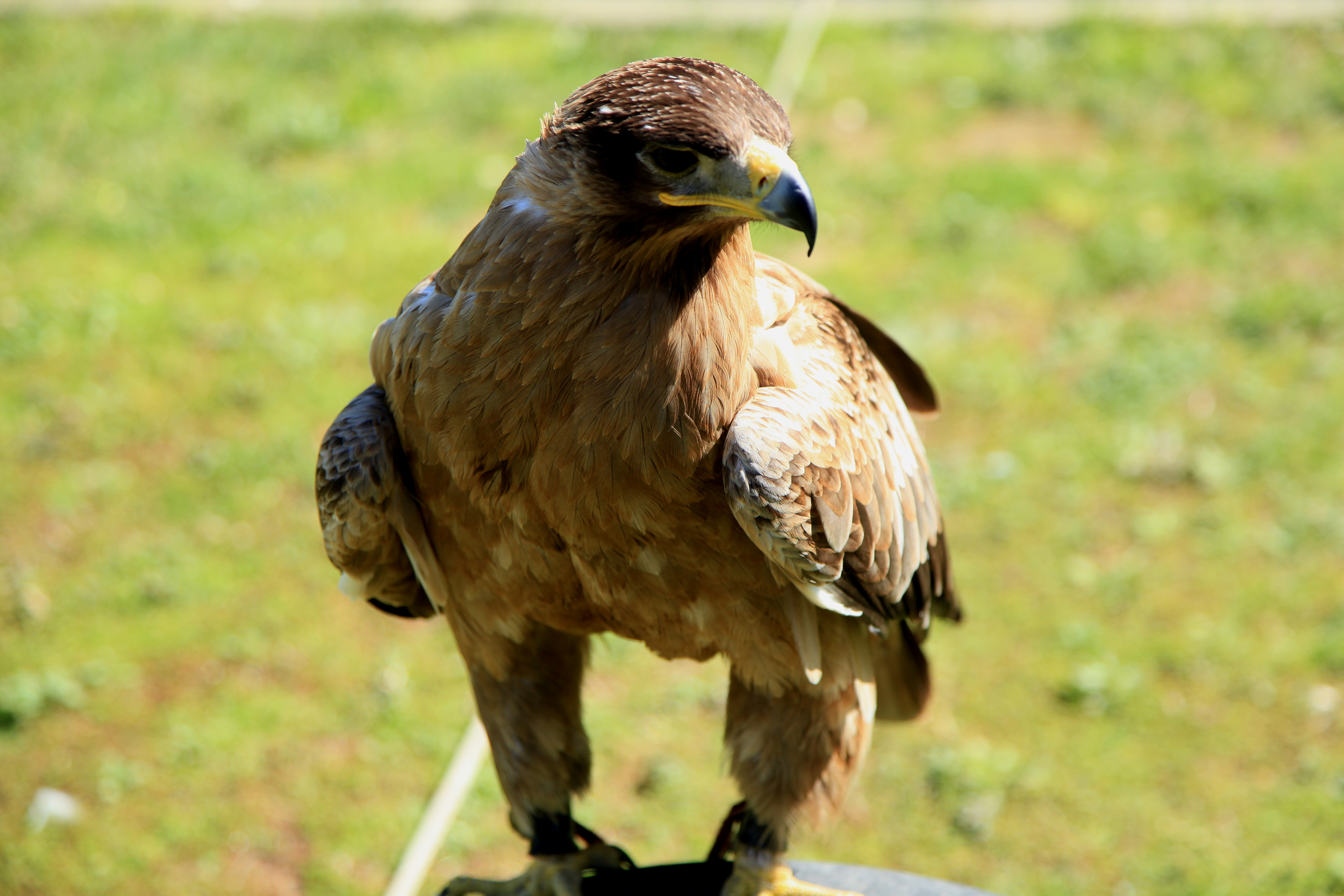
Jesses, Leashes & Swivels
Jesses, leashes, and swivels form the tethering system that keeps your raptor safely secured to your glove, perch, or vehicle during manning, training, and transport. Understanding the different types and their proper use is fundamental to safe falconry practice.
Understanding Jesses
Jesses are narrow strips of leather or synthetic material attached to the bird's anklets (or directly to the leg in traditional systems). They serve as the primary connection point between the bird and the falconer's equipment. When the bird sits on your fist, you hold the jesses between your fingers along with the leash, giving you control without gripping the bird's legs directly.
Jesses must be strong enough to withstand the full force of a bating raptor yet supple enough that they do not restrict the bird's movement or cause irritation. They should hang cleanly without tangling, and they must be sized appropriately for the species. A jess that is too wide or too stiff will irritate the bird's legs. One that is too narrow or worn could snap during a hard bate, resulting in a lost bird.
There are two fundamental jess systems used in modern falconry, and every falconer needs to understand both.
Traditional vs. Aylmeri Jesses
Traditional Jesses
Traditional jesses are single strips of leather that pass through a slit in the anklet (or are tied directly around the bird's tarsus) and have a slit at the free end through which the swivel or leash passes. The traditional system is simple and has been used for centuries, but it has a significant drawback: if the bird escapes or is released for a hunt, the trailing jesses with their slits can catch on branches, fences, and other objects, potentially trapping and killing the bird.
For this reason, traditional jesses should only be used when the bird is tethered to a perch or on the fist. They must be replaced with field jesses (short, slit-free strips) before any free flight. Many modern falconers have moved away from traditional jesses entirely in favor of the Aylmeri system, which eliminates this danger.
Aylmeri Jesses
The Aylmeri system, developed by Major Guy Aylmer in the mid-20th century, separates the anklet from the jess using a brass grommet. A permanent leather anklet with a metal grommet is placed on each of the bird's legs. Removable jess straps thread through the grommets and can be swapped quickly without handling the bird's legs.
The Aylmeri system offers several advantages. For tethering, you use mews jesses (longer straps with slits for the swivel). Before free flight, you swap in field jesses (short, plain strips without slits) that trail harmlessly and cannot snag on anything. The swap takes seconds and does not require removing equipment from the bird's legs. If a bird equipped with Aylmeri field jesses escapes, the short, slit-free jesses pose virtually no entanglement risk.
The Aylmeri system is now considered the standard of care in American falconry, and most state regulations and falconry clubs recommend or require it. The only maintenance concern is checking the grommets periodically for wear or looseness.
Leash Types and Materials
The leash connects the jesses (via the swivel) to the perch or to your glove. It must be long enough to allow the bird comfortable movement on the perch but short enough to prevent the bird from reaching the ground or tangling around the perch base.
Leather Leashes
Traditional leather leashes are made from a single strip of quality leather, typically cowhide or kangaroo. They are supple, quiet, and easy to handle. Leather leashes tie to the perch using a falconer's knot, which can be released quickly with one hand. The downside is that leather can dry out, stretch, and weaken over time, particularly when exposed to rain and moisture in an outdoor mews.
Braided Leashes
Braided nylon or paracord leashes are lighter, stronger, and more weather-resistant than leather. They do not stretch or deteriorate in moisture. However, they can be noisier against the perch, and some falconers find them less pleasant to handle than leather. Braided leashes are excellent for outdoor weathering perches where the leash is exposed to the elements daily.
Biothane Leashes
Biothane is a synthetic material coated in polyurethane that looks and feels similar to leather but is completely waterproof and does not stretch, rot, or dry out. Biothane leashes are increasingly popular among falconers who keep birds in outdoor mews or who fly in wet climates. They clean easily and last indefinitely.
Regardless of material, every leash must have a secure attachment point for the swivel and a reliable method of tying to the perch. The falconer's knot is the standard: it holds securely under the steady pulling force of a tethered bird but releases instantly with a single pull from the falconer.
Swivel Types
The swivel sits between the jesses and the leash, allowing the two jess straps to rotate freely without wrapping around each other or the leash. Without a swivel, a tethered bird that turns on its perch will quickly wrap its jesses into a twisted mess, restricting movement and potentially injuring its legs.
Sampo Swivels
Sampo swivels (originally fishing swivels made by the Sampo company) are barrel-type swivels with two rotating eyes. They are the most widely used swivel in falconry due to their reliability, smooth rotation, and availability in multiple sizes. For falconry use, select stainless steel Sampo swivels rated for at least 150 pounds of pull strength. The standard size for red-tailed hawks and Harris's hawks is a size 3 or 4 Sampo.
Ball-Bearing Swivels
Ball-bearing swivels use internal ball bearings for smoother, lower-friction rotation. They are preferred by some falconers for larger birds or for situations where the bird spends extended time on the perch and may rotate frequently. Ball-bearing swivels are more expensive than Sampo-style swivels but offer superior performance and longevity.
Figure-Eight Swivels
Figure-eight swivels are simple two-ring designs connected by a twisted center. They are lightweight and inexpensive but offer less smooth rotation than Sampo or ball-bearing designs. They are adequate for smaller raptors like kestrels and merlins but are not recommended for larger, more active birds.
Regardless of type, inspect your swivel regularly for corrosion, stiffness, or wear. A swivel that does not rotate freely defeats its purpose and can lead to tangled jesses and leg injuries. Replace swivels at the first sign of rough rotation or visible wear.
Putting It All Together
The complete tethering assembly, from bird to perch, runs in this order: anklet on the bird's leg, jess through the anklet grommet, jess slit through the swivel eye, leash through the other swivel eye, leash tied to the perch ring with a falconer's knot. Each connection must be secure, and the entire assembly should allow the bird to move comfortably on the perch without any component binding, twisting, or catching.
When setting up, ensure the leash length is appropriate for the perch type. On a bow perch, the leash should be long enough for the bird to reach the ground comfortably (for bathing or casting) but short enough that the bird cannot reach the base of the perch and get tangled. On a block perch, the leash should allow the bird to stand on the block and bate to the ground without the leash catching on the block edge.
Always test your setup by gently pulling each connection before leaving the bird unattended. A jess that is not fully threaded through a grommet or a leash that is loosely tied to the perch ring is an invitation for the bird to escape.
Maintenance and Replacement
Jesses, leashes, and swivels are safety-critical equipment. Inspect them daily as part of your routine when you weigh and feed your bird:
- Jesses: Check for cracks, thin spots, and stretching. Leather jesses should be conditioned weekly with a light application of neatsfoot oil. Replace jesses immediately if you notice any wear near the slit or grommet, as these are the highest-stress points.
- Leashes: Inspect the full length for fraying, cuts, or weak spots. Leather leashes should be conditioned regularly. Replace any leash that shows signs of wear at the swivel attachment or the knot area.
- Swivels: Rotate the swivel between your fingers daily to check for smooth operation. Clean with light oil if rotation becomes stiff. Replace immediately if you feel grinding or see visible corrosion.
- Grommets: On Aylmeri anklets, check that grommets are tight and not spinning freely in the leather. A loose grommet can allow the jess to pull through, freeing the bird.
Top Picks
Complete Aylmeri system including leather anklets, brass grommets, mews jesses, and field jesses. Pre-cut and ready to install. Available in sizes for kestrels through red-tails.
Premium kangaroo leather jesses that are exceptionally strong for their thickness. Supple and comfortable for the bird with excellent longevity. Naturally water-resistant.
The industry-standard falconry swivel. Stainless steel construction resists corrosion, smooth barrel rotation prevents jess tangling. Rated for 150+ pounds of pull strength.
Weather-resistant braided nylon leash designed for falconry. Will not stretch, rot, or weaken in moisture. Easy to tie falconer's knots and available in multiple lengths.
Browse Jess & Leash Sellers
Find verified falconry equipment dealers offering jesses, leashes, swivels, and anklet systems.
Browse SellersList Your Products
Sell falconry tethering equipment? Reach falconers actively searching for quality jesses and swivels.
Submit Your Listing