
Resources → Gear & Equipment
Falconry Lures & Creances: Training Equipment Guide
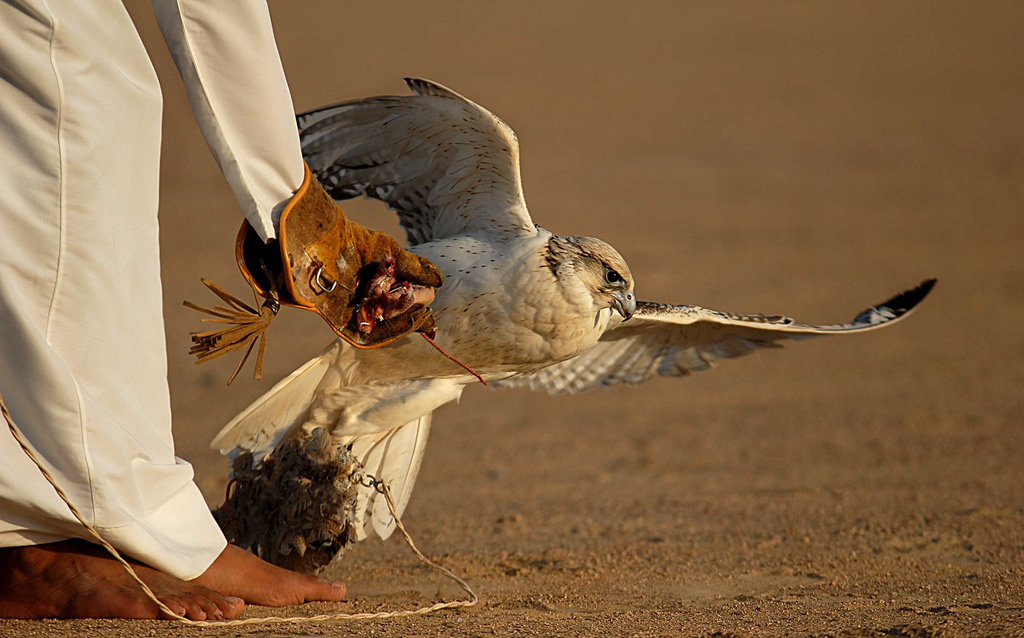
Lures and creances are essential training tools in falconry. The lure teaches a raptor to return to the falconer, while the creance provides a safety line during early free-flight training. Understanding when and how to use each tool is fundamental to successful manning and training.
Types of Falconry Lures
Swing Lure
The swing lure is the primary training tool for longwing falcons (peregrines, prairies, merlins, gyrfalcons). It consists of a padded weight - often a leather pouch or pair of dried wings - attached to a 4–6 foot cord. The falconer swings the lure in circles, simulating prey in flight. The falcon learns to stoop on the lure, building fitness and reinforcing the return behavior.
Swing lure work is both training and exercise. Many falconers fly their birds to the lure daily during the hunting season to maintain fitness and sharpen the bird's aerial pursuit skills. A well-trained falcon will stoop repeatedly on the lure, gaining altitude between passes.
Drag Lure
The drag lure simulates ground quarry. It is pulled along the ground on a line, mimicking a running rabbit or rodent. Drag lures are used primarily with hawks (Harris hawks, red-tails, Cooper's hawks) that hunt ground game. The lure is typically a fur-covered pad or a piece of rabbit hide stuffed with padding.
Drag lure training teaches the hawk to pursue and bind to moving ground targets. It builds foot strength and the instinct to grab and hold. Some falconers use a remote-control car with a drag lure attached for more realistic and unpredictable movement.
Rabbit Lure
A rabbit lure is a specialized drag lure made from real or synthetic rabbit fur. It is weighted and shaped to resemble a rabbit in motion. Some models include a mechanism that allows the falconer to release the lure at the right moment, simulating a kill. These are primarily used for final-stage training before flying at live quarry.
Garnished Lure
Any lure type can be "garnished" - food is tied to the lure as a reward. During early training, the lure is always garnished so the bird associates coming to the lure with a food reward. As training progresses, the bird may be called to an ungarnished lure and rewarded from the fist after it lands on the lure.
Creance Training
A creance is a lightweight line (50–100 feet) attached to the bird's jesses during early training. It serves as a safety tether while the bird learns to fly to the fist or lure. If the bird decides to fly away, the creance prevents it from escaping.
Creance training follows a progression:
- Short hops (3–6 feet) - Bird jumps from a perch to the garnished fist. Creance is slack on the ground.
- Medium distance (15–30 feet) - Bird flies from a perch or T-perch to the fist. Creance drags but provides security.
- Full creance (50–100 feet) - Bird flies the full length of the line with confidence and speed.
- Free flight - Once the bird responds instantly at full creance length, the creance is removed. This is a judgment call that requires experience - your sponsor will guide you.
Creance lines should be lightweight braided nylon or Dacron. Avoid monofilament fishing line, which can cut into the bird's legs. The line should be thin enough that the bird barely notices it but strong enough to hold if the bird bolts. Most falconers use 30–50 lb test braided line.
Making Your Own Lure
Many falconers make their own lures. A basic swing lure requires:
- Two pieces of leather (6" x 4") sewn together with a weight inside (lead shot bag or sand)
- A 5-foot length of paracord or nylon cord
- Dried bird wings (pigeon, quail, or starling) attached with cable ties for realism
- A swivel between the lure and cord to prevent line twist
For drag lures, a piece of rabbit hide stuffed with cotton or foam, attached to 20 feet of light rope, works well. Weight it enough that it slides along the ground without bouncing.
Training Tips
- Always garnish early - Never call a bird to an empty lure during initial training. The lure must always mean food until the behavior is deeply conditioned.
- Timing matters - Call the bird when it is at proper flying weight and keen. A full bird will ignore the lure.
- Wind direction - When using a creance, work into the wind so the bird gains lift as it flies toward you.
- One session, one lesson - Keep training sessions short (10–15 minutes). End on a success.
- Lure speed - Match the lure speed to the bird's ability. Start slow and increase speed as the bird becomes more skilled.
- Never jerk the lure away - If the bird catches the lure, let it feed. Pulling the lure away teaches the bird that the lure is unreliable.
Recommended Products
Weighted leather swing lure with attached cord. Durable construction for daily training sessions with falcons.
100-foot braided Dacron creance line. Lightweight, low-stretch, and strong enough for training any raptor.
Realistic rabbit fur drag lure for hawk training. Weighted for smooth ground movement with 20-foot pull line.
Belt-mounted treat pouch for carrying garnish (food rewards) in the field. Quick-access design for lure training sessions.
Browse Lure & Training Gear Sellers
Find verified sellers of falconry training equipment in our directory.
Browse ListingsSell Training Equipment?
List your falconry training products. Featured listings appear first in search results.
Add Your Business